The Mimosa & Beyond
The mimosa is the simplest cocktail in existence: equal parts champagne and orange juice. Two ingredients, zero fuss. And yet it launched a multi-billion-dollar brunch economy and permanently changed the way Americans think about OJ, elevating it from breakfast necessity to something worth celebrating.
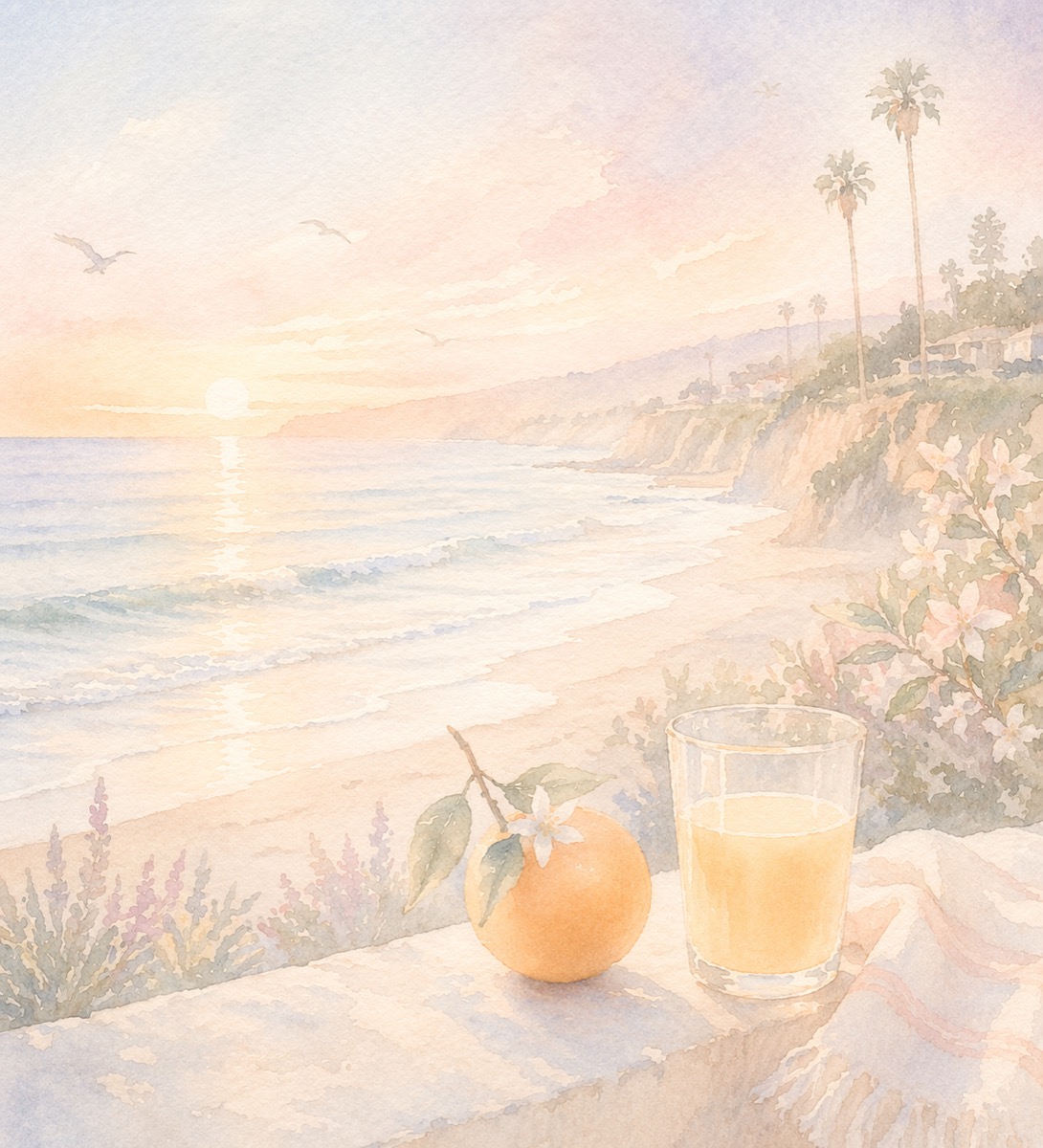
The drink likely originated at the Ritz Paris in the 1920s, credited to bartender Frank Meier. But it was the American brunch boom of the 1980s and '90s that turned it into a cultural institution. Bottomless mimosa specials became the calling card of weekend restaurants. Premium California OJ became the upgrade that justified a higher price point.
Beyond the mimosa, orange juice has a rich culinary life that most people never encounter. Blood orange reductions in fine dining. Bright citrus marinades at the heart of California-Mexican cuisine. Fresh-squeezed Valencia in craft cocktail bars from Los Angeles to New York. The juice transcended the breakfast table decades ago. It just rarely gets the credit.